

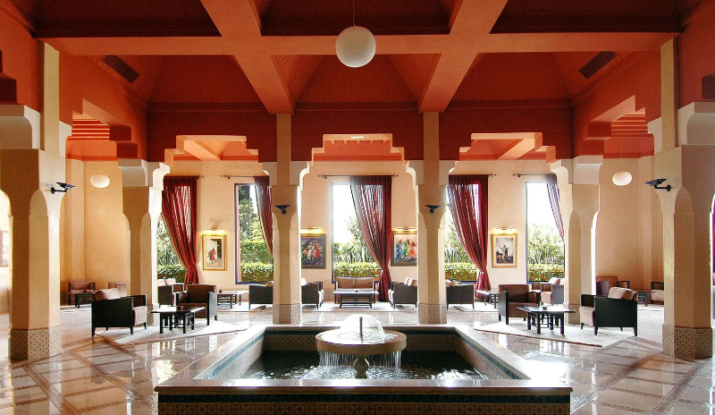
Anyone who has spent time renovating a courtyard house in the medina knows this much: Marrakesh riad interior design is not a passing fashion. It’s a language, built over centuries, that keeps getting reinterpreted rather than replaced. Walk through Bab Doukkala or the Kasbah district today and you’ll see the same bones — the central courtyard, the carved cedar, the zellige tilework — dressed in ways that feel current without ever feeling trendy in the disposable sense.
That distinction matters if you own, manage, or are restoring a riad. Trends that fade in five years are expensive mistakes in a building this old. What follows are five design directions that have proven staying power, and that continue to define what makes riad interiors feel both authentically Moroccan and quietly luxurious.
1. Zellige Tilework as a Statement, Not Just a Border
Zellige — the hand-cut geometric mosaic tile that’s been produced in Fez for close to a thousand years — remains the single most recognizable feature of riad interiors. What’s shifted is how it’s used. Older restorations often confined zellige to borders and fountain surrounds. Today’s best riad interiors let it climb entire walls, wrap columns, or clad a hammam floor to ceiling.
The trick is restraint elsewhere. A room with a full zellige wall needs plain plaster, simple furniture, and neutral textiles around it, or the effect turns busy rather than striking. Riads that get this balance right tend to feel calmer, not more decorated — which is counterintuitive until you see it done well.
2. Tadelakt Plaster in the Bathroom and Beyond
Tadelakt, the polished lime plaster traditionally used to waterproof hammams, has moved well past its original function. It now shows up on bedroom walls, kitchen backsplashes, even exterior courtyard walls, prized for its soft sheen and the way it seems to hold light differently depending on the hour.
“People assume tadelakt is only for wet rooms, but its real value is texture — it gives a wall depth that flat paint simply can’t.”MAZAYA restoration team lead
Because tadelakt is applied and polished by hand over several days, it’s one of the areas where working with an experienced local team pays off. Poorly applied tadelakt cracks and stains within a year; well-applied tadelakt can last decades and only improves with age.
3. Carved Cedar Wood, Reworked for Modern Layouts
Cedar wood ceilings, doors, and mashrabiya screens are the structural soul of a riad — and they’re not going anywhere. What’s changed is context. Instead of reserving carved cedar for grand reception rooms, designers are bringing it into smaller, more functional spaces: a home office nook, a reading corner off the courtyard, a screened balcony.
This works because cedar’s warmth softens rooms that would otherwise feel too minimal or too Western in proportion. It also solves a practical problem in older riads — natural ventilation — since mashrabiya screening allows airflow through spaces that don’t have modern climate control.
Where This Matters Most for Owners
If you’re managing a riad as a rental property or boutique guesthouse, cedar detailing photographs exceptionally well and is consistently cited in guest reviews as a highlight. It’s one of the few upgrades that pays for itself in both guest experience and long-term durability.
4. Muted, Earth-Based Color Palettes
The postcard image of a riad — cobalt blue doors, saturated ochre walls — still exists, but interior color choices have quieted down considerably. Terracotta, sand, dusty rose, and deep olive are now far more common than the saturated hues of a decade ago. These tones read as more sophisticated in photographs and, practically speaking, age better against Marrakesh’s intense light, which can make bright colors look faded or garish within a couple of seasons.
This is also where furnishing choices matter. Vintage Berber rugs, brass lanterns, and hand-loomed textiles do more visual work in a muted room than they would against a busier backdrop, letting each piece stand on its own rather than competing for attention.
5. The Courtyard as a Living Room, Not Just a Passage
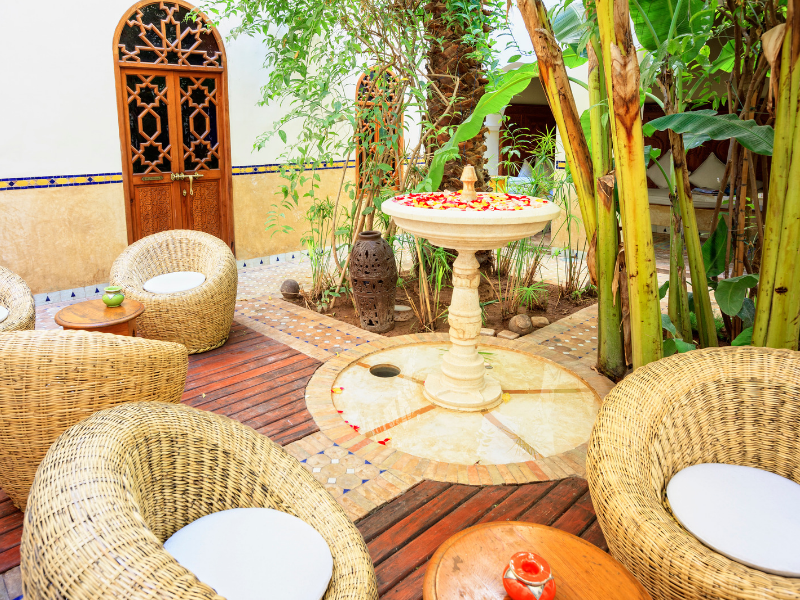
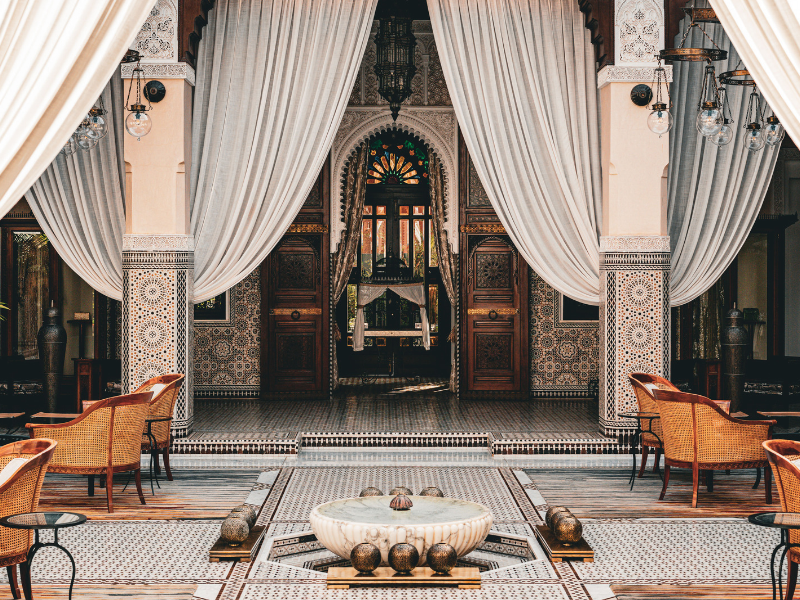
Historically, the riad courtyard was primarily transitional space — somewhere you crossed on the way to a room, with a fountain or citrus tree at its center. The current trend treats it as the main living space instead. Low seating, outdoor rugs, and shaded lounge areas turn the courtyard into where residents and guests actually spend their time, with the surrounding rooms becoming more private or supporting spaces.
This shift makes sense given Marrakesh’s climate — the courtyard stays cooler than enclosed rooms for much of the year — but it also reflects a broader move toward riads that feel lived-in rather than staged for photographs alone.
Getting the Balance Right
None of these five trends work in isolation. A riad with beautiful zellige and cedar detailing but poor structural upkeep will lose its appeal fast, which is why interior design in a building this old can’t really be separated from ongoing facility care. MAZAYA works across both sides of that equation, pairing interior design guidance with the technical maintenance — waterproofing, structural checks, climate control — that keeps a riad’s character intact for the long term.
For owners based outside Morocco, or those managing a property they can’t personally oversee day to day, this combination is often what makes the difference between a riad that ages gracefully and one that requires constant, costly correction. MAZAYA is expanding into Morocco, with dedicated riad restoration and property oversight support planned for the local market.
If you’re planning a renovation or simply want a second opinion on a riad you already own, you can explore MAZAYA’s comprehensive solutions or book an appointment to walk through your space with our team. You can also browse past projects in our portfolio, or get in touch directly through our contact page.
Marrakesh riad interior design will keep evolving in small ways — that’s the nature of a living tradition — but the trends above have already proven they’re built to last, not just to photograph well for a season. For more on how MAZAYA approaches riad restoration and interior styling, visit MAZAYA.Pro or read more on our blog.
Comments (2)
James Whitfield
Great breakdown of the courtyard-as-living-room shift. We stayed in a riad last spring where this was done beautifully — low seating, shaded corners, barely used the interior rooms except to sleep. Completely changes how the space feels.
Sofia Bennani
We restored our grandmother’s riad in the Kasbah last year and the tadelakt point really resonates — we learned the hard way that a rushed application cracks within months. Worth every extra day it takes to do it properly.